


Bhubaneswar: Nestled on the outskirts of Bhubaneswar, the historic site of Sisupalgarh Fort stands as one of India’s most remarkable early urban fortifications. Dating back to around the 3rd century BCE, Sisupalgarh is widely regarded as one of the largest and best-preserved ancient fortified cities in the subcontinent, offering a fascinating glimpse into early urban planning and civilization in eastern India.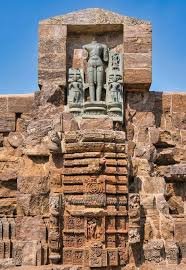
Spread over an area of approximately 1.2 square kilometers, Sisupalgarh was not merely a military stronghold but a well-planned urban settlement. The city was enclosed by massive laterite stone walls, nearly 9 meters high in some sections, forming a near-perfect square. Each side of the fortification measured roughly 1.2 kilometers, showcasing an advanced understanding of geometry and spatial organization. Archaeological excavations have revealed that the city had eight major gateways, strategically placed at equal intervals, indicating a sophisticated approach to defense and accessibility.
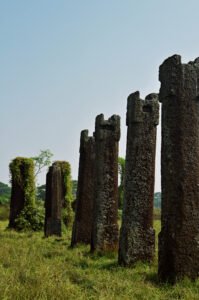
What makes Sisupalgarh particularly significant is its planned layout. Inside the fortified walls, archaeologists have discovered evidence of wide streets, habitation areas, drainage systems, and possibly administrative or ceremonial structures. This suggests that Sisupalgarh was a thriving urban center with a structured civic life, long before the rise of many other prominent cities in India. The grid-like pattern of streets reflects a level of urban planning comparable to that of the Indus Valley Civilization, although Sisupalgarh belongs to a later historical period.
Historians believe that Sisupalgarh may have been associated with the ancient Kalinga region, which gained prominence during the reign of Ashoka. While there is no direct evidence linking the fort to the famous Kalinga War, its timeline overlaps with this significant period in Indian history. Some scholars suggest that Sisupalgarh could have played an important role in regional administration and trade during and after the Mauryan era.
Excavations conducted by the Archaeological Survey of India and other international teams have unearthed pottery, coins, beads, terracotta figurines, and iron tools, indicating a vibrant economy and skilled craftsmanship. These findings point to active trade connections and a culturally rich society that flourished within the fort’s walls.
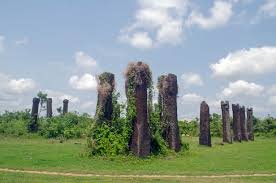 Today, Sisupalgarh stands as a silent yet powerful testament to India’s ancient urban heritage. Although much of the original structure has eroded over time, the remaining ramparts and gateways continue to attract historians, archaeologists, and curious travelers. Located just a few kilometers from the famous Lingaraj Temple, the site offers a unique opportunity to explore a lesser-known but equally significant chapter of Odisha’s history.
In conclusion, Sisupalgarh Fort is not just an archaeological site; it is a symbol of early urban ingenuity and cultural richness. Its scale, design, and historical importance make it one of the most significant ancient fortified cities in India. For anyone interested in history, architecture, or archaeology, a visit to Sisupalgarh is both enlightening and inspiring—a journey back in time to one of India’s earliest planned cities.