


Sirpur, Chhattisgarh – Nestled approximately 78 km from the capital city of Raipur, the quiet town of Sirpur in the Mahasamund district is reclaiming its title as one of India’s most significant archaeological treasures. Once the flourishing capital of the Panduvanshi kings and known as Shripur (the City of Wealth), this site is a rare example of a multi-religious center where Hindu, Jain, and Buddhist monuments have stood in harmony for over 1,500 years.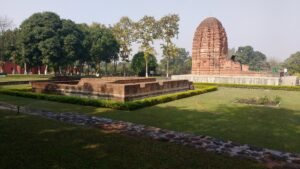
A Brick-by-Brick Legacy
The architectural silhouette of Sirpur is dominated by the Laxman Temple, a 6th-century marvel. Standing as one of the finest surviving examples of brick temple architecture in India, its intricate carvings—depicting religious motifs and daily life—showcase a level of craftsmanship that rivals the stone temples of Khajuraho.
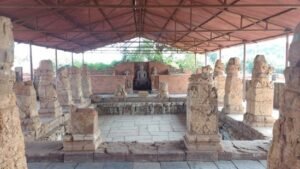
Adjacent to these Hindu shrines lies a vast complex of Buddhist Monasteries (Viharas). Excavations have revealed that Sirpur was once a major seat of Buddhist learning, comparable to Nalanda. The Anand Prabhu Kuti Vihar and the Swastik Vihar stand as silent witnesses to the era when the famous Chinese traveler Xuanzang (Hiuen Tsang) visited the city in the 7th century, noting the presence of nearly 100 monasteries housing over 10,000 monks.
The Confluence of Three Faiths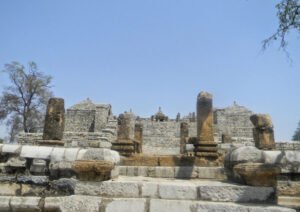
What sets Sirpur apart for heritage enthusiasts is the seamless integration of diverse spiritual traditions:
-
Hinduism: Represented by the Baleshwar Mahadev temple complex and the unique Rama temple.
-
Buddhism: A sprawling network of viharas and a massive bronze-casting center that once exported art across Southeast Asia.
-
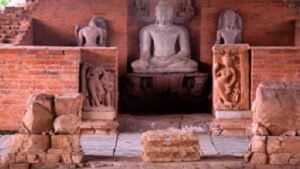
Jainism: Recent excavations have unearthed Tirthankara idols and Jain basadis, completing the religious trinity of the ancient city.
 A Global Heritage Destination
The Chhattisgarh government has recently intensified efforts to place Sirpur on the UNESCO World Heritage map. With its strategic location on the banks of the Mahanadi River, the site is being developed as a key pillar of the state’s “Eco-Sutra” tourism circuit, blending historical exploration with the natural beauty of the surrounding wilderness.
For the modern traveler, Sirpur offers more than just ruins; it offers a walk through a golden age of Indian history. As the sun sets over the Mahanadi, casting a glow on the ancient red bricks of the Laxman Temple, it is easy to see why this “City of Wealth” remains one of India’s most enduring cultural legacies.
 Travel Essentials for ExploreHeritage Readers:
-
Distance: 78 km from Raipur (approx. 2-hour drive).
-
Best Time to Visit: November to February.
-
Don’t Miss: The Sirpur National Dance and Music Festival, held annually against the backdrop of the illuminated temples.
-
Nearby Attractions: Barnawapara Wildlife Sanctuary (approx. 15 km away).